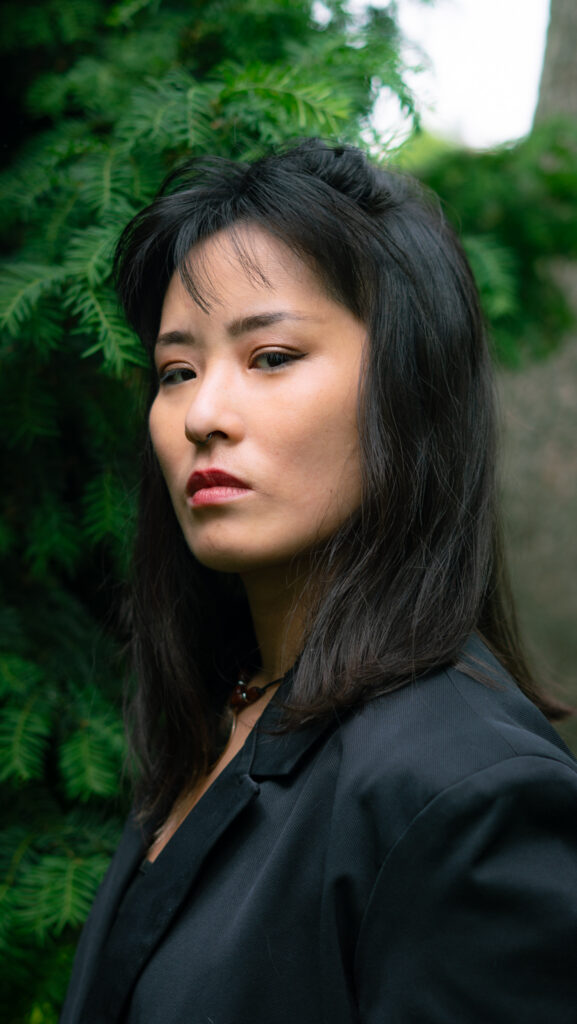
"Onde Eu Coloco O Meu Corpo Agora? (Where do I place my body now?) "
Workshop with Thaís Omine
Saturday 4 July, 6:30pm - 8pm
Part of the "Caring Histories" Project at Mental Health Arts Space
Open to all, QTBIPOC to the front! Places limited. Register using the form below.
How do we mourn what we cannot remember?
This question has been echoing through the silence that permeates Ryukyuan/Okinawan memory. Memory that was not passed from one generation to another — from grandmother to mother, from mother to daughter. To remember the humiliation, the pain, the violence of Japanese colonialism. To accept that we are now part of it. The difficulties of migrating to the West. The erasure of our history, of the crimes committed against us. The othering through “assimilation.”
These are not only Okinawan wounds. They belong to many peoples touched by the same colonial forces, the same imperialist erasures.
In this session, Thais will screen her short experimental film “O Silêncio é Muito Eloquente” (Silence Is Very Eloquent) (2025) and share excerpts from her work-in-progress experimental documentary “Onde Eu Coloco O Meu Corpo Agora?” (Where Do I Place My Body Now?) — both circling around the grief of a place that no longer exists, and the rage of seeing one’s homeland occupied.
After the screening, there will be space for your feedback on the film. Then, we will move into a collective exercise — a kind of affective mapping — to explore how different people who share the same colonizer (or have been shaped by the same imperial forces) experience loss, anger, and longing. You will be invited to name emotions as if they were places, to draw a temporary cartography of grief.
There will be an appointed trauma-informed awareness person on-site during the workshop.
Places are limited, please register below. 🙂
Thaís Omine is a queer Okinawan-Brazilian visual anthropologist and filmmaker from Guarulhos, São Paulo, who lives in Berlin. Her films bring hidden stories and suppressed narratives back into the light and she works at the intersection of critical theory, embodied knowledge, and decolonial/anticolonial practices.